How Do You Know if Your Commercial Solar System is Underperforming?
How Do You Know if Your Commercial Solar System is Underperforming?
Published: October 2026 | Technical Review by Chad Foster, Service Manager, Alternative Energy Systems
A commercial solar system can be operating every day and still produce less energy than it should.
That is one of the challenges with managing a larger solar installation. A system does not necessarily have to shut down completely for a business to experience lost production. Equipment faults, communication problems, inverter issues, changing site conditions and other performance concerns can reduce output while the system continues to appear operational.
For businesses, farms, commercial properties and solar asset managers, understanding how a system is performing is an important part of protecting the value of the solar investment.
What Does Commercial Solar Underperformance Look Like?
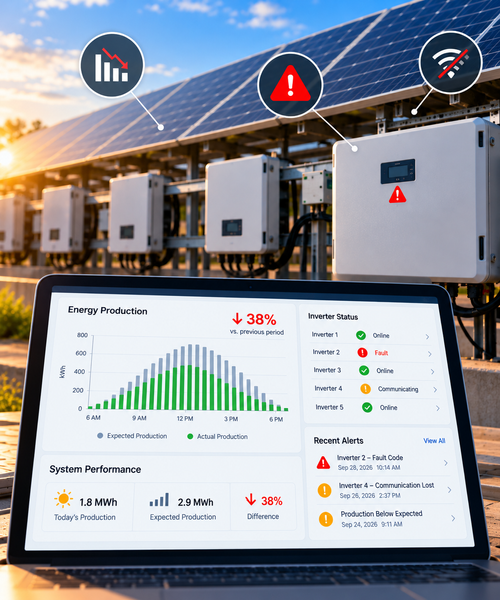
Solar underperformance simply means that a system is producing less energy than expected based on its design, conditions and historical performance.
Sometimes the problem is obvious. An inverter may go offline or a system may generate a clear fault notification. Other times, the change can be gradual enough that it is easy to overlook.
- Unexpected drops in solar production
- Higher-than-anticipated utility costs
- Inverter or equipment alerts
- Communication failures between equipment and the monitoring platform
- Individual sections of an array producing differently than expected
- Changes in production that cannot easily be explained by weather or seasonal conditions
The larger the solar system, the more important it can be to identify these changes promptly. Even a partial reduction in production can represent a meaningful amount of lost energy over time.
Can a Solar System Still Be Running While Losing Production?
Yes.
One of the most common misconceptions about solar is that a system is either working or it isn't. Commercial systems are more complex than that.
A system may continue producing electricity even when part of the array or a piece of equipment is not performing correctly. Without reviewing production data or system alerts, a business may not immediately realize that something has changed.
That means simply seeing that the solar system is online does not necessarily tell you whether it is performing at its best.
How Can Lost Solar Production Affect Energy Costs?
Commercial solar systems are designed to offset a portion of the electricity a business would otherwise purchase from its utility.
When solar production decreases, the business may need to draw more electricity from the grid to make up the difference. Depending on the system, facility energy use and utility structure, reduced solar production can contribute to higher energy costs.
On a large commercial installation, the value of that lost production can add up considerably over time.
This is one reason commercial solar should be viewed as an operating asset rather than equipment that can simply be installed and forgotten.
Why Preventive Maintenance Matters for Commercial Solar
Monitoring can tell you that something may require attention. Preventive Maintenance helps support the broader health and long-term performance of the system.
Rather than waiting for a noticeable production loss or equipment failure, a preventive approach focuses on identifying and addressing potential concerns before they become larger operational problems.
For businesses managing a significant solar investment, Preventive Maintenance can help:
- Maintain system visibility
- Identify performance changes sooner
- Reduce the risk of prolonged unnoticed production losses
- Support equipment performance over time
- Provide better information for troubleshooting and service decisions
Active Monitoring can be an important component of that larger maintenance strategy.
What Causes a Commercial Solar System to Underperform?
There is no single cause.
Performance issues can originate from the solar equipment itself, the monitoring infrastructure or conditions at the property.
- Inverter or electrical equipment faults
- Communication or internet connectivity problems
- Monitoring hardware or software issues
- Soiling or debris affecting the array
- New or changing shade conditions
- Damaged or malfunctioning components
- Sections of the system going offline
- Normal equipment wear or degradation
- Other site-specific electrical or mechanical issues
Because commercial solar installations vary significantly in size, equipment and design, diagnosing a performance issue typically requires looking at the individual system rather than assuming one solution applies to every property.
What Is the Difference Between Passive and Active Solar Monitoring?
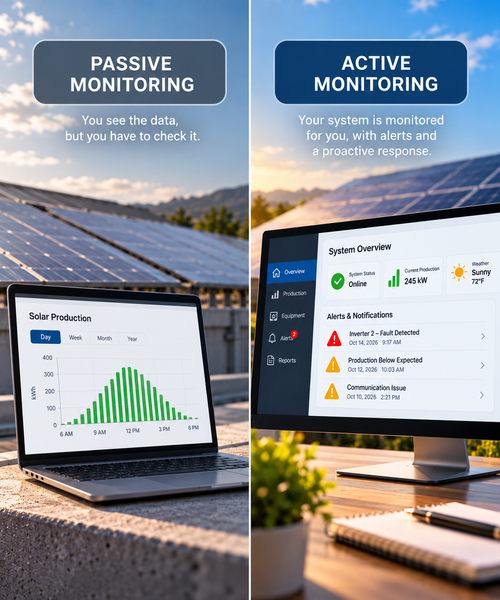
Monitoring provides visibility into what a solar system is doing, but not every monitoring arrangement provides the same level of oversight.
With passive monitoring, the system owner typically has access to a monitoring portal and receives automated alerts when certain conditions occur. The customer is responsible for watching those alerts and contacting a solar service provider when something requires attention.
With Active Monitoring, someone is actively reviewing system alerts and taking action when a potential issue is identified. For larger commercial systems, that additional oversight can be valuable because the financial impact of extended lost production may be significantly greater than it would be on a smaller residential system.
Both types of monitoring depend on properly functioning monitoring hardware and software, along with reliable internet connectivity.
Who Should Consider Active Monitoring?
Active Monitoring may be particularly valuable for organizations with larger commercial solar installations where uninterrupted production has greater financial importance.
That may include:
- Commercial and industrial facilities
- Agricultural operations
- Large businesses
- Multi-building properties
- Organizations managing multiple solar installations
- Solar asset managers responsible for system performance
The appropriate level of monitoring and maintenance depends on the individual system, how the property uses energy and the owner's operational priorities.
When Should You Have a Commercial Solar System Evaluated?
You do not necessarily need to wait for a major system failure.
If production has changed unexpectedly, your utility costs no longer align with expectations, your monitoring platform is generating alerts, or you simply do not have a clear picture of how your commercial solar system is performing, it may be worth having the system reviewed.
A qualified solar service provider can help evaluate available monitoring information, diagnose potential issues and determine whether additional maintenance or monitoring support makes sense.
Protect the Long-Term Value of Your Commercial Solar Investment
Installing solar is only the beginning of the life of a commercial energy system.
Understanding how the system performs over time can help businesses identify problems earlier, limit unnecessary production losses and make more informed decisions about maintenance and repairs.
Alternative Energy Systems provides commercial solar service, Preventive Maintenance and monitoring support for businesses, farms and organizations throughout Northern California. AES can review your existing system and help determine what level of monitoring and maintenance support is appropriate for your operation.
Want to better understand how your commercial solar system is performing?
About the Technical Reviewer
Chad Foster, Service Manager, Alternative Energy Systems
Chad Foster is a State of California General Electrician Journeyman with advanced training in solar system service, operations and maintenance, electrical systems, monitoring, diagnostics, thermography, and solar equipment.
His training and certifications include:
Amicus Solar O&M Certified: Tech 1, Tech 2, Tech 3
WECA Certified: Service Technician; Low Voltage and Communications; NEC; Solar Technician
Solar Energy International Certified: Thermography & Drones; SEI 350 O&M Strategies; Groundmount Solar Installation Safety
Manufacturer Certifications: Enphase, Tesla, SMA, SolarEdge, ALSO Energy, and solar modules